Photobiomodulation & Waterbiomodulation
The therapeutic properties of electromagnetic radiation on living tissues were first considered and then described more than 50 years ago in Russia through the exceptional research of the renowned biologist Tina Karu. The first “Western” applications of this work were celebrated shortly afterward in the USA, in 2000, during a major event organized by NASA.
The therapeutic radiation studied in these studies concerned, and still concerns, wavelengths that, within the visible spectrum, extend from the beginning of blue to the first third of infrared. This experimental reality gave rise to the concept of Photobiomodulation and its associated mechanisms. Logically, this mechanism has been centered on one objective: the improvement and optimization of cellular energy efficiency. The initial thinking and implementation of this logic focused almost exclusively on the electron transport mechanisms of the “respiratory chain,” located in the mitochondria, particularly through its “complex” IV, cytochrome c oxidase. It was around this reasoning that the concept of Photobiomodulation was successfully built.
However, another important biological dimension existed… but had been neglected because it did not appear to play a major role in cellular energy.
This was simply water…
Yet it was clearly established that from the end of the ultraviolet to the beginning of the infrared, this more energetic part of the spectrum raised the temperature of water. Nevertheless, for several years, Photobiomodulation (PBM) was limited to exploring the effect of electromagnetic radiation on cellular physiology in the red and near-infrared frequency bands. The research demonstrated that certain wavelengths could also interact with different cellular chromophores, but with the aim of directly or indirectly modulating essential mechanisms of energy metabolism, centered on cellular respiration and ATP production.
One question, however, deserved to be asked: Could electromagnetic radiation also interact much more broadly with the entirety of the biological environment in which its structures evolve?
Should we consider that photobiomodulation should concern both intracellular and extracellular environments with equal interest?
It was obvious!… provided we discovered to what extent the structure of water constituted a predominant target for electromagnetic radiation!
Physics would brilliantly demonstrate this!
Let us, therefore, try to gather the demonstrative elements.
To this end, let us adopt a “second name” for the role of electromagnetic radiation by adopting the concept of water biomodulation.
This then leads us to consider water as another biological interlocutor in the action of electromagnetic radiation.
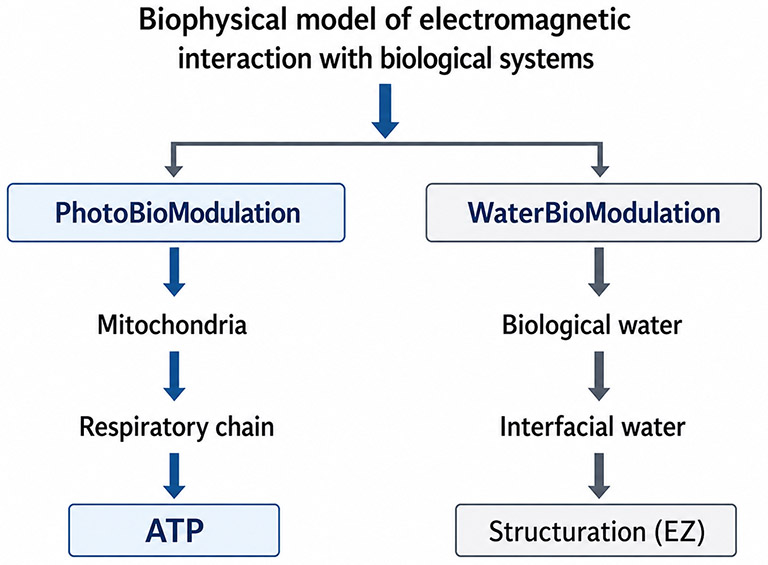
This model proposes a simple hypothesis: biologically active electromagnetic radiation could interact with living organisms at two complementary levels:
- cellular structures
- the biological aqueous environment
Photobiomodulation: Modulation of Cellular Respiration
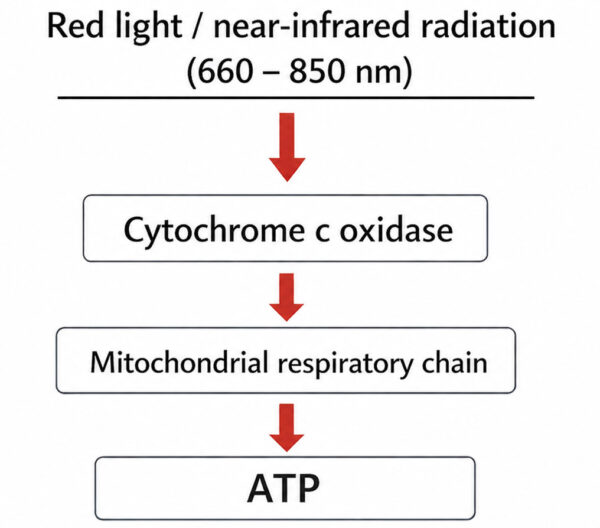
Photobiomodulation (PBM) is based on the interaction between certain wavelengths of electromagnetic radiation and biological chromophores. Among these chromophores, cytochrome c oxidase, a key enzyme in the mitochondrial respiratory chain, plays a central role. Under the influence of certain wavelengths of light, several biological phenomena have been observed:
- stimulation of mitochondrial respiration
- increased ATP production
- modulation of oxidative stress
- activation of cell signaling pathways
These effects are currently being studied in several biomedical fields:
- tissue healing
- muscle recovery
- pain management
- neurology, in general, through its motor and sensory manifestations
The work of researcher Michael R. Hamblin has, over the years, significantly contributed to structuring this field of research.
Water: A Fundamental Component of Life
Water is the major component of living matter and plays a crucial role in the organization of biological systems. In adult humans, it represents on average 60 to 70% of total body mass, with variations depending on the tissue:
- brain: ~75%
- muscles: ~70–75%
- blood: ~80%
- bones: ~20–25%
At the cellular level, the proportion of water is even higher: the cytoplasm generally contains 70 to 85% water. One liter of water contains approximately 3.3 × 10²⁵ water molecules. Thus, in a typical cell of about 10 µm in diameter, we can estimate the presence of several billion water molecules.
These water molecules therefore constitute the dominant physical environment in which biological processes take place. Indeed, if we count the number of molecules that make up the human body, the result in percentage is overwhelming… significantly more than 95% of all our molecules are water molecules!
Polarity and Molecular Organization
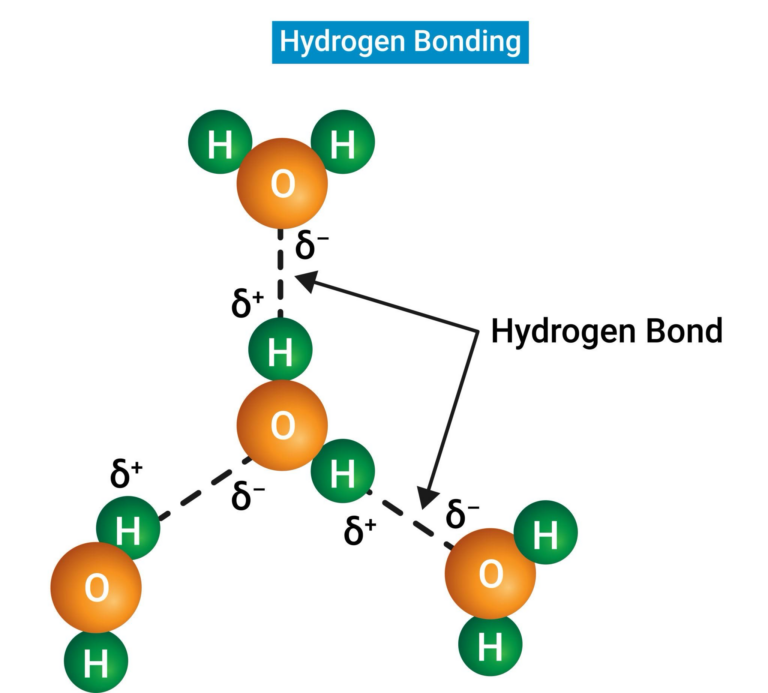
The water molecule has a unique geometric structure. The angle between the O–H bonds is approximately 104.5°. This gives the water molecule significant electrical polarity.
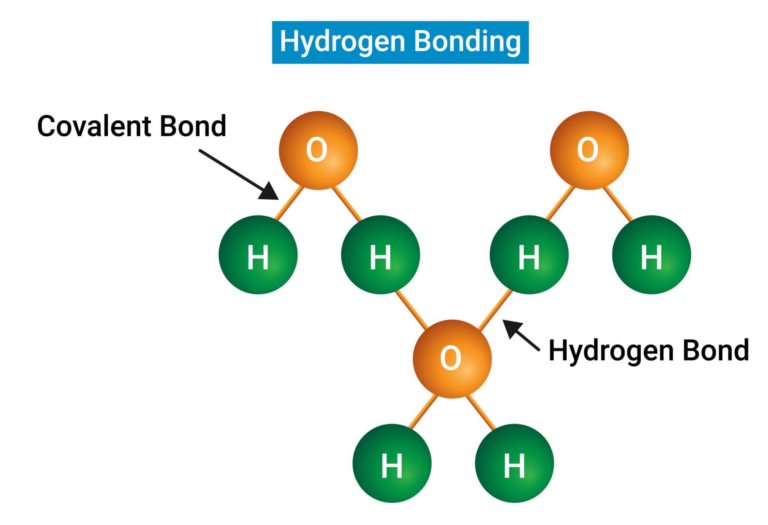
Each molecule can form up to four hydrogen bonds, creating a dynamic three-dimensional network. These networks are constantly reorganizing with a lifetime on the order of a few picoseconds.
Interfacial Water and Exclusion Zones (EZ Water)
In biological systems, water is almost always found in the vicinity of biological surfaces:
- cell membranes
- proteins
- nucleic acids
- extracellular matrices
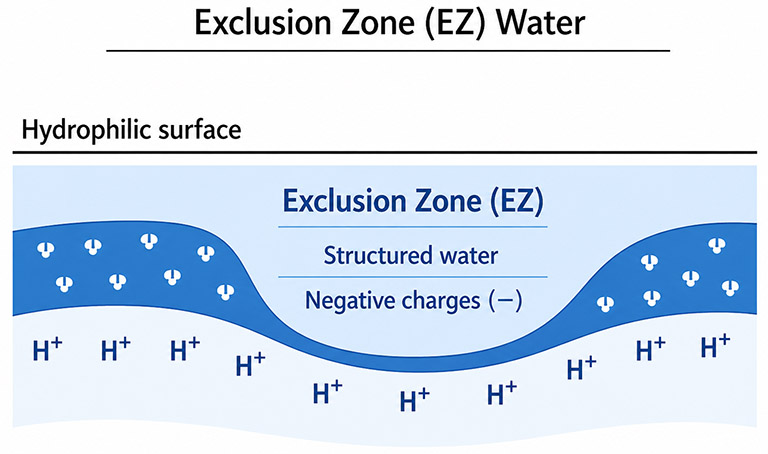
Under these conditions, water can adopt specific structures called interfacial waters.
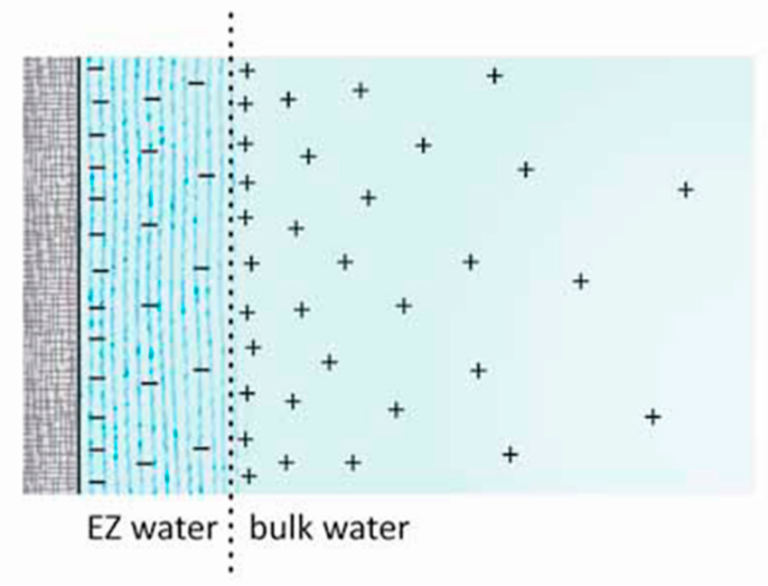
The work of Professor Gerald H. Pollack highlighted a particular phase called Exclusion Zone Water (EZ Water). This phase exhibits several properties:
- more ordered molecular organization
- exclusion of many particles and solutes
- negative electrical charge
- physical properties distinct from bulk water
In some experiments, the thickness of these zones can reach 100 to 300 micrometers.
Infrared Wavelengths and Interaction with Water
Photobiomodulation applications primarily utilize wavelengths in the deep red and near-infrared bands, specifically 660 nm and 810–850 nm.
These wavelengths effectively penetrate biological tissues and interact with certain cellular chromophores. However, from the perspective of infrared spectroscopy of water, the most pronounced absorption bands of liquid water are located around 1450 nm, 1940 nm, and especially 3000 nm.
These bands correspond to the vibrational modes of O–H bonds. The band around 3000 nm, in particular, corresponds to a particularly strong absorption, which can, however, be accompanied by a significant thermal effect.
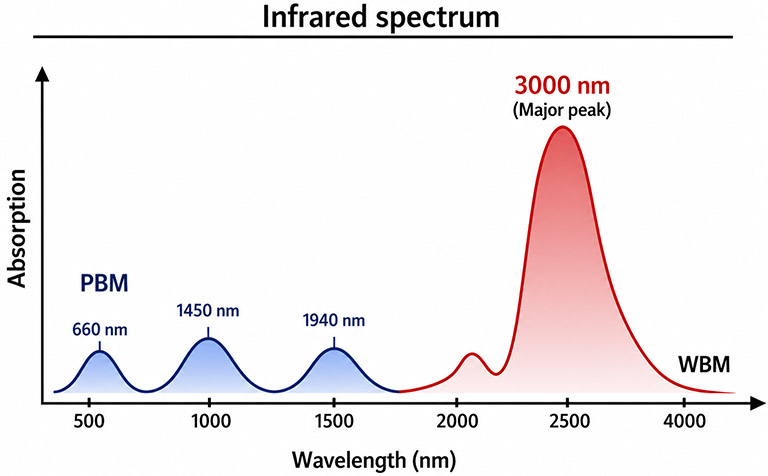
PBM: 660 nm – 850 nm → interaction with mitochondria
WBM: 1450 nm – 1940 nm – 3000 nm → possible interaction with biological water
Towards a Complementary Bioenergetic Concept: WaterBioModulation
If electromagnetic radiation can interact with mitochondrial chromophores as well as with the structure of biological water, then it becomes possible to consider two levels of biophysical interaction:
- PhotoBioModulation (PBM): photon-mitochondrium interaction, modulation of cellular respiration
- WaterBioModulation (WBM): photon-biological water interaction, possible modulation of interfacial water structure
The introduction of the WaterBioModulation (WBM) concept thus aims to propose a complementary bioenergetic framework, enriching current approaches to PhotoBioModulation.
A Research Perspective
The combined exploration of these two approaches could open up a particularly interesting field of research: the study of interactions between electromagnetic radiation, biological water, and cellular metabolism.
For clinicians and researchers interested in biophysical approaches to living organisms, this perspective could constitute a promising avenue for reflection and investigation.
Water: A Profoundly Complex Physical System
Perspectives from Fundamental Physics
In biology, water is often considered a simple solvent. However, from a physical perspective, this view is a gross oversimplification.
The physicist Richard Feynman, winner of the 1965 Nobel Prize in Physics for his work on quantum electrodynamics, which explains the interactions between light and matter, already emphasized the remarkable complexity of water, notably in his famous physics lectures (The Feynman Lectures on Physics). He stressed several fundamental points:
“Water is a simple molecule… with extraordinary properties.”
Although composed of only three atoms (H₂O), water exhibits particularly complex physical properties:
- strong dipolar interactions
- a dynamic network of hydrogen bonds
- emergent collective behaviors
- atypical thermodynamic properties
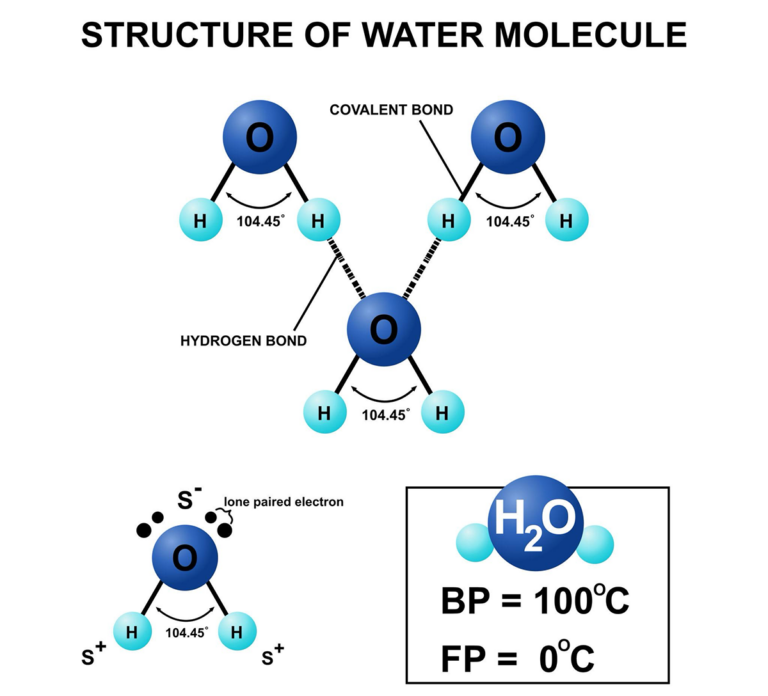
Richard Feynman insisted that these properties result from the collective interaction of a very large number of molecules, and cannot be reduced to a simple individual description.
A Collective and Non-Trivial System
From this perspective, water must be considered a highly correlated collective system in which:
- local interactions influence the overall organization
- structures emerge dynamically
- macroscopic properties depend on complex microscopic phenomena
This approach is particularly relevant in biological systems, where water is in constant interaction with:
- hydrophilic surfaces
- electromagnetic fields
- organized molecular structures
Sensitivity to Fields and Physical Interactions
Feynman also emphasized that complex molecular systems can be sensitive to external physical perturbations, including:
- electromagnetic fields
- thermal energy
- surface interactions
In this context, it becomes relevant to explore the hypothesis that certain wavelengths of electromagnetic radiation, particularly in the infrared, could influence:
- the organization of the hydrogen bond network
- the collective properties of water
- interfacial structures
Towards a Broader Biophysical Perspective
These elements from fundamental physics do not, in themselves, constitute a theory of biological water.
However, they provide an important conceptual framework:
- Water is not simply a passive solvent;
- it is a dynamic, structured medium, potentially sensitive to its physical environment.
From this perspective, the study of interactions between:
- electromagnetic radiation,
- water structure, and
- biological systems
falls within a natural continuum between fundamental physics and biophysics.
WaterBioModulation
The introduction of the WaterBioModulation (WBM) concept can thus be seen as an extension of this line of thought: exploring how electromagnetic energy could interact not only with biological structures, but also with the structured aqueous environment that surrounds them.
We can therefore compare the interaction patterns of electromagnetic radiation with classical biological systems and with water…
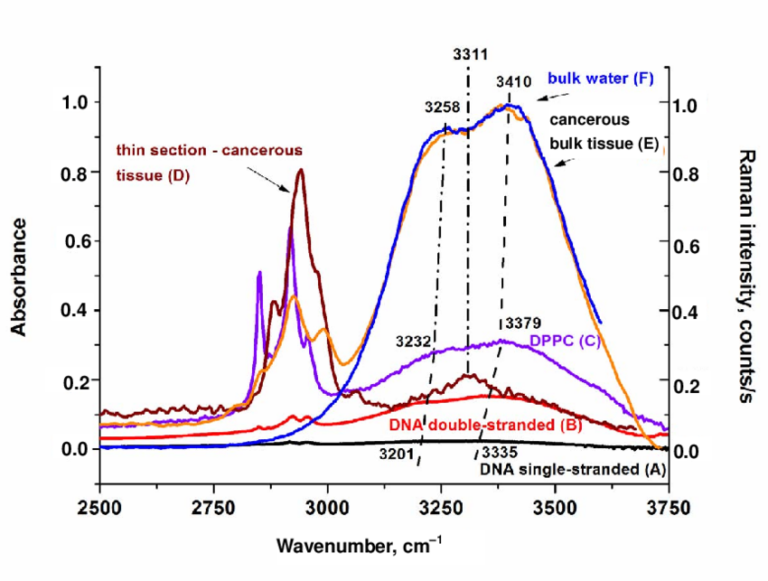
In conclusion
It seems relevant, for any biorepair or biostimulant treatment, to be able to act sequentially, as much as possible, on the mitochondrial compartment and the water compartment…